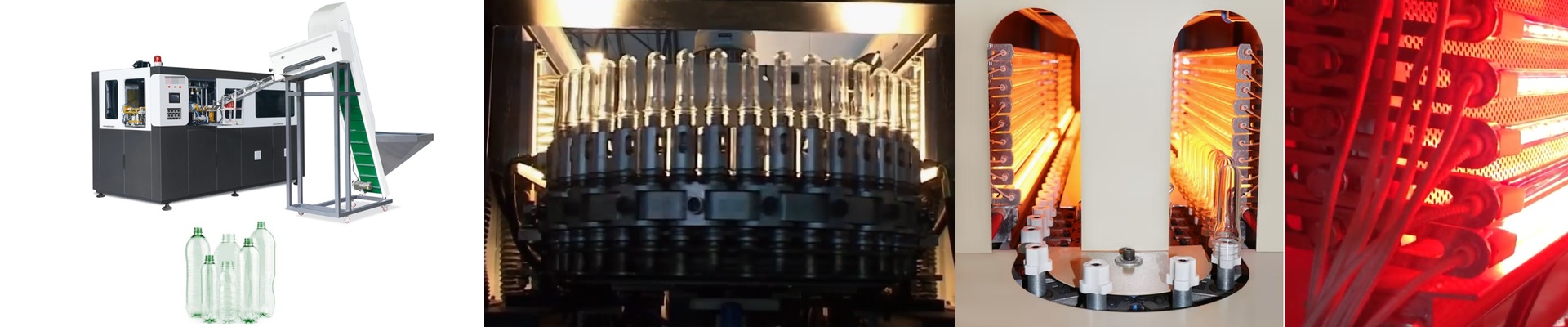
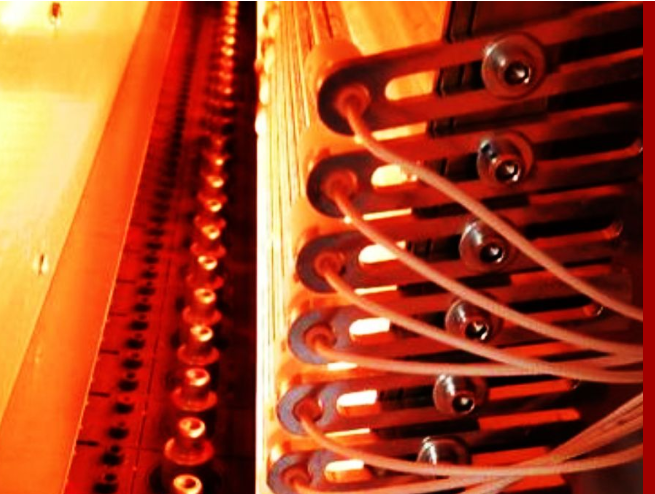
On the blow molding floor, the heating tunnel doesn’t care about your schedule. If preforms come in cool or uneven, you’re making off-spec bottles, generating scrap, and watching the stretch-blow station stutter. We built our PET preform heating zone components to keep that tunnel honest, shift after shift. What matters under the hood We mirror the OEM heating architecture with short-wave infrared emitters tuned for PET: quartz envelopes, high-purity tungsten filaments, and tight spectral control that hits the preform wall without cooking the neck. You can spec output from 1200–1800 W, 230/380 V configurations, and standard R7s or proprietary connectors to match Sidel, Krones, SIPA, Husky, SACMI, and Nissei ASB blow molders. Each emitter follows the original heating zone footprint, so mounting points, reflectors, and wiring paths stay the same. Why it shows up on your line Once installed, you feel it in the numbers you’re already tracking. Expect up to 12% lower energy draw from better thermal efficiency and faster ramp-up, plus around 15% less scrap from temperature drift. Changeovers get shorter because the heating profile settles quicker, and you’ll see fewer unplanned stops tied to lamp failures. Payback typically lands within 3–6 months, driven by fewer spares, less downtime, and more consistent output. Here’s the catch: these emitters only behave like plug-and-play when reflector alignment and airflow are right. Check lamp orientation and clearance to the preform path—misalignment creates hot spots and shortens lamp life. And match the power supply and control settings to the new lamp’s curve. If the heater block is worn or pitted, replace it first. The best emitter can’t fix poor thermal coupling.