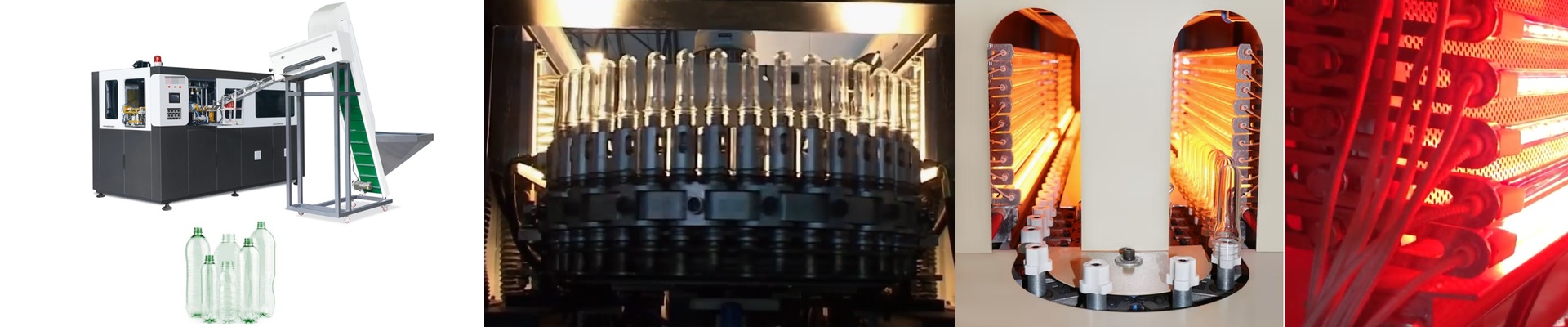
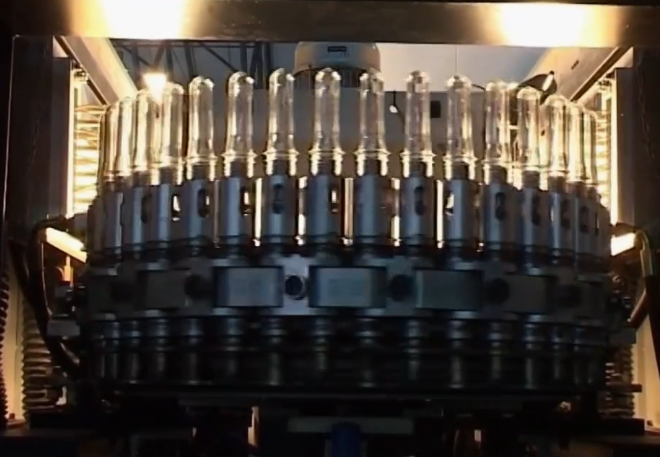
On the blow molding floor, preform heating is where you bleed minutes every hour and money every shift. Mismatched IR? You get uneven wall thickness, unstable cycles, and too many lamp changes. We built our NIR emitter specifically for PET preheating on Sidel, Krones, SIPA, Husky, SACMI, and Nissei ASB blow molders. The point is simple: heat fast, repeat, and cut the failures. What matters under the hood We run NIR in a tight band around 1.2–1.4 µm because PET soaks it up efficiently—surface heats quickly, then conducts inward. That lets you shorten the heating tunnel, recover temperature faster, and hold setpoints even when the line is running flat out. Each emitter is rated 120–240 V, uses quartz tubes and R7s connectors, and is calibrated to match the OEM power density and beam profile. In practice, you swap lamps one-for-one without retuning the heating curve. Why it sticks on real lines On a typical stretch blow molding line, the right NIR emitter cuts heating time by 12–18%. That can put another 400–800 bottles per hour out the door without changing the machine footprint. Energy use drops 15–22% because the heat goes straight into the preform, not the tunnel air. Relamping intervals stretch to 5,000+ hours with under 5% output drift, so you spend less on spares and get fewer unplanned stops. Over a year, those savings add up fast—labor, energy, and downtime. The install details that actually matter Installation is straightforward—R7s base, same mounting, same voltage—but you have to confirm reflector geometry and power density for your exact blow molder and preform. A worn or misaligned reflector will kill efficiency, even with the right emitter. And because NIR heats fast, start conservative and tune up gradually to avoid hot spots. Match the optics, and the lamp does the rest.