

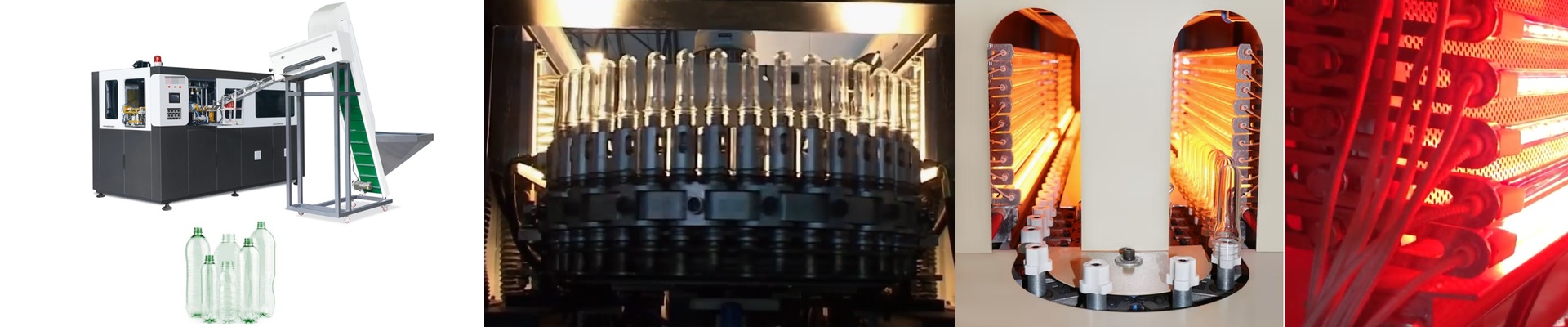
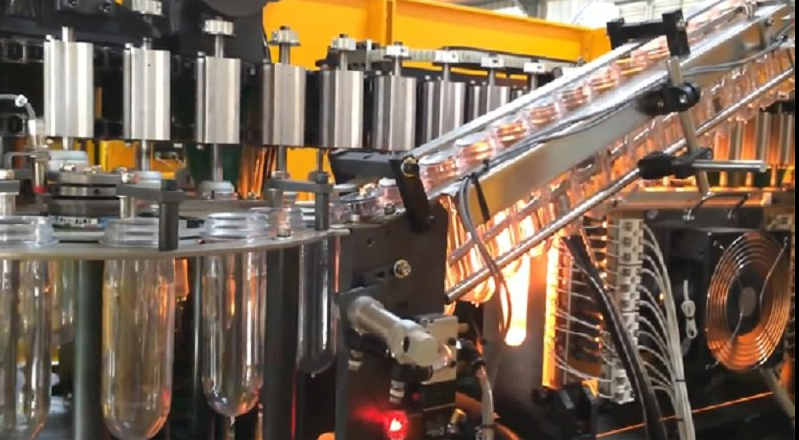
On a blow molding line that’s moving, the heater bulb isn’t a “commodity.” It’s the control knob for every preform you run. When the Sidel Universal 2 blower heater bulb starts missing, you know it immediately: uneven wall thickness, blown bottles, and a heating tunnel that spends its time chasing temperature instead of holding it steady.
What matters, technically
The Sidel Universal 2 blower heater bulb is short-wave infrared, built for fast response and tight control over the preform surface. In practice, you can hit the preform temperature you need with a predictable rise—no lag, no overshoot. Power is matched to the OEM’s heater zone requirements, so emitter output lines up with the intended thermal load of the Universal 2 heating section. The quartz envelope keeps output stable in high airflow, and the R7s connector is matched to the blower socket geometry for solid alignment and repeatable contact resistance.
Why this matters on the machine
Stretch blow molding isn’t just about heat. It’s about repeatable heat distribution, preform after preform. With this bulb, the thermal field across the heating tunnel stays more uniform, so you cut back on hot spots and cold seams that drive scrap. Preform penetration improves because the energy profile is tuned to the preform wall, not the air around it. That means fewer parameter tweaks when you switch colors or weights, and more stable output when the line is running at speed. Energy use drops, too, because the heater isn’t fighting itself—it heats on demand, recovers quickly, and holds setpoint with less oscillation.
The practical details
Installation is straightforward, but alignment is the make-or-break. Even a small offset changes the hot zone, and that shows up as a repeatable drift in quality. Double-check voltage and wattage against the blower spec, and inspect the reflector. A tired reflector can shift the heat pattern even when the bulb itself is within spec. Plan replacement around scheduled downtime. The bulb’s output is stable through its life, but it does age. Keep spares on hand, and log run hours so you swap before output drift starts to move the bottle weight curve.